Field: Scent, Culture and Nature
Thinking About Scent and Japanese Culture
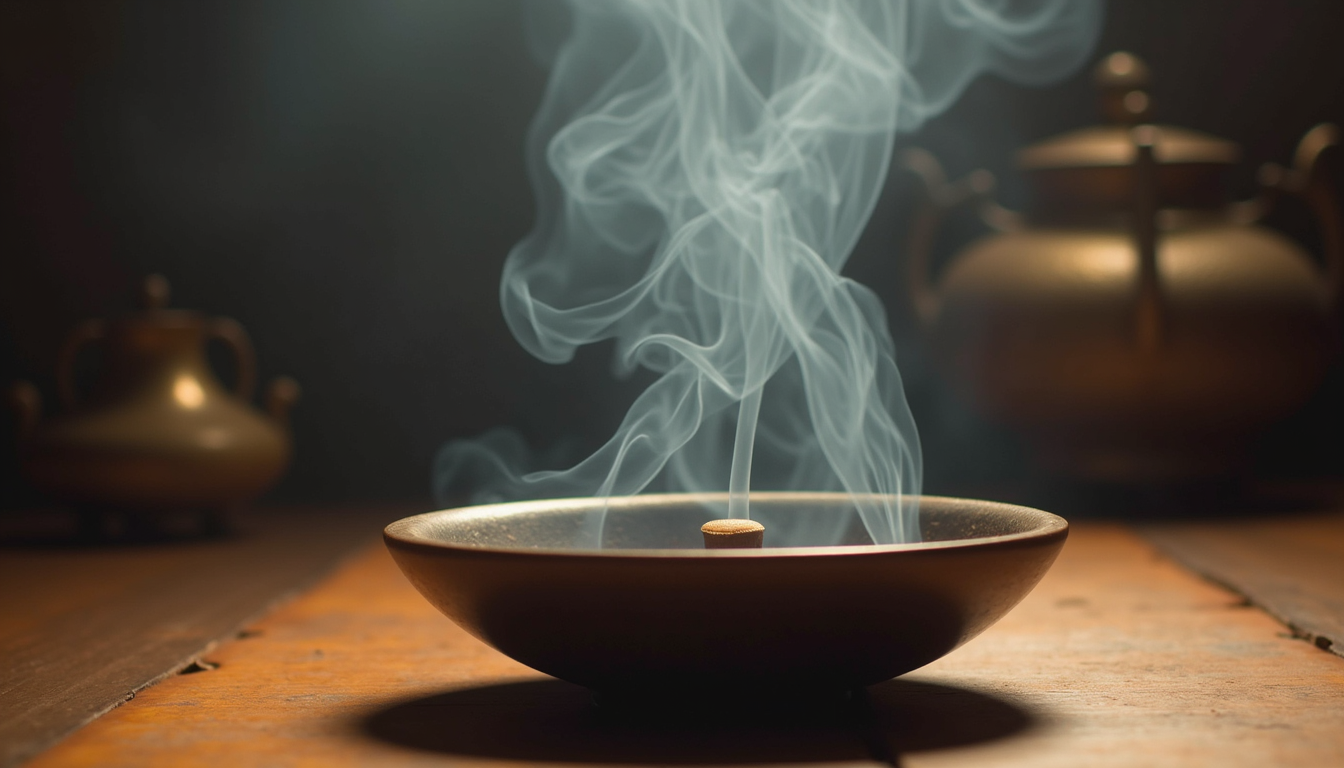
How has scent been treated and felt within Japanese culture? Taking fragrant wood, incense, literature, religion, and everyday life as our clues, we consider the relationship between the people of Japan and scent.
Research Question
How has scent been treated and felt within the culture of Japan?
Where Did Scent Enter Japanese Culture?
When we think about scent, we tend to picture modern things such as perfume or aromatherapy products.
But Japan's engagement with scent is far broader than that.
Fragrant wood and incense have been used not only in religious settings, but across many parts of culture: court culture, literature, the tea ceremony, clothing, and living spaces.
So this time, rather than asking only “what scents did Japan have?”, we will think from the perspective of “how did the Japanese sense scent, and what meaning did they give it?”
Fragrant Wood and the Culture of “Listening to Scent”
Fragrant wood is central when thinking about Japan's scent culture.
Fragrant woods such as agarwood and sandalwood have been treasured since ancient times.
In Japan, incense came into use in connection with Buddhist culture, and afterwards a culture of appreciating scent developed. The legend of fragrant wood handed down on Awaji Island is one of the things that tells us how long the history of incense in Japan is.
In time, an expression was born: not simply to “smell” scent, but to “listen to scent.”
Here we can see a sensory culture unique to Japan.
Rather than receiving scent only as information, one imagines from it the seasons, scenes, memories, and stories.
The very act of “sensing” scent became a cultural act in itself.
The Heian Period and Scent
When we think about the culture of the Heian period, scent is a particularly fascinating presence.
In the aristocratic society of the time, there was a culture of adding scent to clothing and furnishings, and scent also expressed a person's presence in an invisible form.
Moreover, in the literature of the Heian period, not only the colors of nature and the seasons, but also scent and atmosphere are depicted as important senses.
In classical literature such as The Tale of Genji, for instance, scent appears as a clue for imagining a person or a space.
This is a very interesting point.
Rather than explaining the scent itself, scent lets us imagine “what is not there.”
Because scent has the power to make us remember spaces and people in a way different from vision.
Nature and Scent
In Japanese culture, scent is also deeply connected with nature.
Plum, cherry blossom, pine, plants and trees, rain, soil, forests.
Japan's sense of the seasons can be felt not only through vision, but through olfaction as well.
In the aristocratic culture of the Heian period in particular, a sensibility developed that found beauty in the colors and scents of plants. For the plum as well, its color and scent are known to have been connected with the seasons and a sense of beauty.
In other words, one could say that within Japanese culture there has been a relationship in which “to sense scent” meant “to sense nature.”
Scent Becomes “Memory”
When researching scent, what we particularly want to focus on is “memory.”
The moment we sense a certain scent, we may remember an old place, a season, or time spent with someone.
That is because scent is not a mere stimulus; it is connected with personal experience.
And in Japanese culture too, scent has remained in people's memories, connected with literature, the sense of the seasons, and the culture of daily life.
From here, we can pose one question.
How does scent preserve the memory of a culture?
The Laboratory's Perspective
At the Sakurai Morika Note Laboratory, we do not simply present Japan's scent culture as “tradition”; we observe it from multiple perspectives:
scent × nature × culture × memory × sensibility
For example:
- Why do the scents of particular plants connect with Japan's sense of the seasons?
- How has scent been expressed in literature and stories?
- How does the act of “listening to incense” in kōdō (the way of incense) differ from the modern olfactory experience?
- How is Japan's scent culture changing within modern spaces and daily life?
There are many questions that still have no answers.
That is precisely why, at this laboratory, we begin with
observe, record, think.
The Next Question
For the Japanese, when did “scent” become culture?
And,
what kind of scent do we, today, feel to be “Japanese”?
We will carry this question into the next research note.